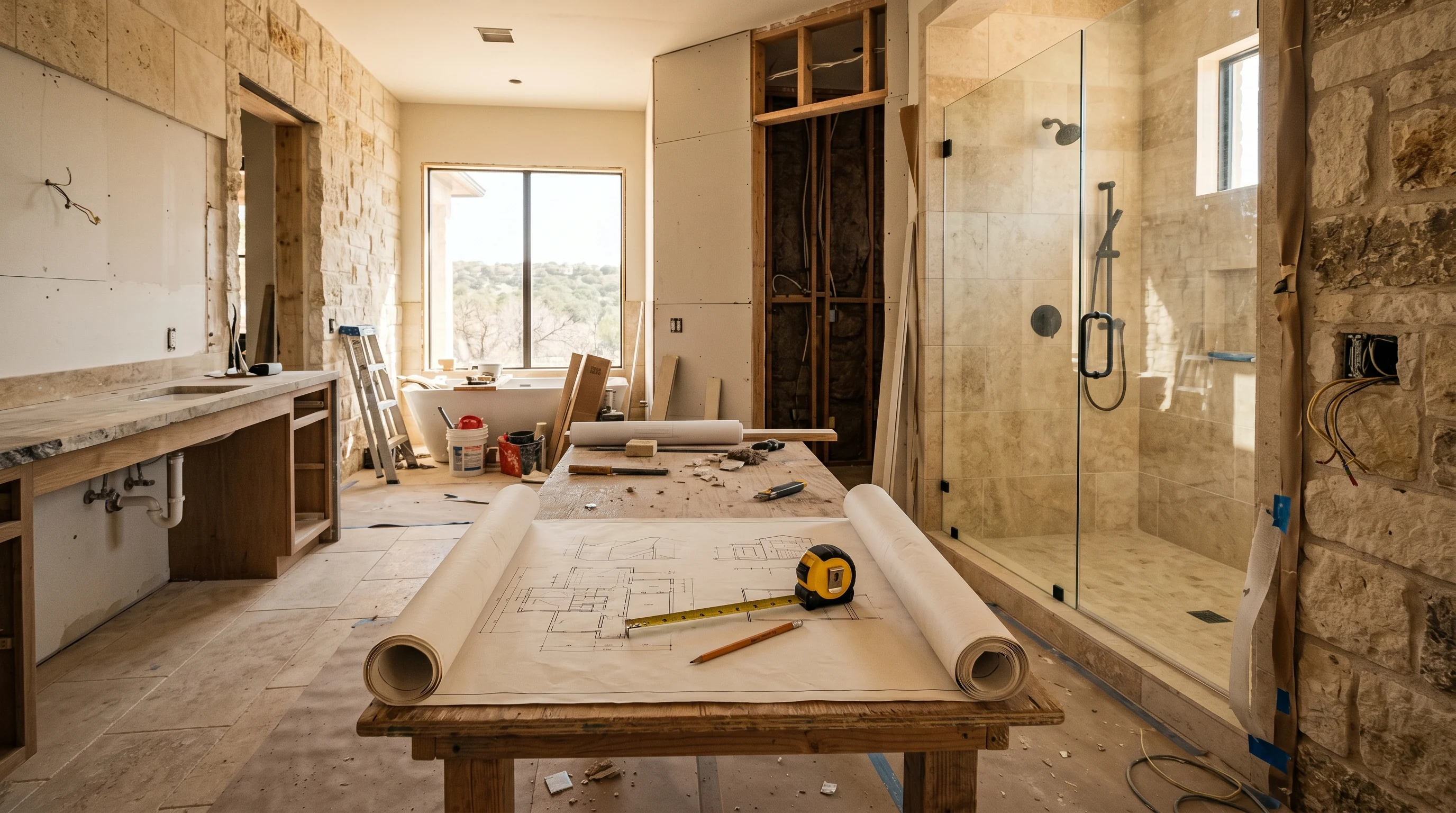
Quick answer: A bathroom remodel in the San Antonio area requires a permit check if the project scope goes beyond cosmetic updates and involves moving or replacing plumbing lines, adding or modifying electrical circuits, altering wall framing, changing window openings, or restructuring the layout. While purely aesthetic updates (such as replacing tile, installing a new countertop on an existing vanity, or replacing a faucet in the same location) typically do not trigger permit requirements, any structural or system modifications require review by the local Authority Having Jurisdiction (AHJ). Homeowners must confirm their specific permit path with the local building department before demolition begins to prevent costly delays, stop-work orders, or inspection failures during resale.
Understanding local jurisdictions and permitting authorities
Permit requirements are not uniform across the San Antonio metropolitan area; they depend entirely on the specific location of the property and its corresponding Authority Having Jurisdiction (AHJ). For homes within San Antonio city limits, the City of San Antonio (COSA) Development Services Department is the governing body. Properties in surrounding communities—such as Helotes, Boerne, Fair Oaks Ranch, Leon Springs, or unincorporated areas of Bexar, Comal, or Kendall counties—fall under different municipal or county regulations, each with unique submittal guidelines, fees, and inspection timelines.
Because local rules vary, a key step in pre-construction planning is verifying the exact jurisdiction of the home. Unincorporated county areas may only require septic or basic trade inspections, while master-planned communities or incorporated cities have strict structural and zoning codes. Professional contractors must verify the specific AHJ requirements during the initial takeoff to establish a realistic schedule and estimate. Never assume that a permit process in one neighborhood applies identically to another.
Common project scopes that trigger permit review
When planning a bathroom renovation, it is helpful to categorize the work by its impact on the home’s primary systems. In general, any work that touches the core structural, electrical, or plumbing infrastructure will require a permit and subsequent inspections. Below are the most common triggers:
- Plumbing Modifications: Replacing a faucet in the same sink does not require a permit. However, relocating a shower drain, converting a tub to a walk-in shower, moving a vanity to another wall, or changing the underlying water supply lines and drain-waste-vent (DWV) piping will trigger a plumbing permit. Correct slope, venting, and hot/cold line routing are vital for code compliance.
- Electrical Upgrades: Simply replacing a light fixture or light switch in its existing box is a cosmetic update. Installing new lighting, adding GFCI outlets near water sources, running a dedicated circuit for a steam shower or heated floor, or altering the routing of electrical wiring requires an electrical permit and a licensed trade inspection.
- Framing & Structural Alterations: Removing or altering walls (load-bearing or non-load-bearing) to expand a bathroom layout requires a building permit. This also applies to adding new windows, enlarging existing window openings, or repairing damaged subfloors or ceiling joists affected by rot or water leaks.
- Waterproofing & Subfloor Rebuilds: While tile replacement is aesthetic, rebuilding a tiled shower pan or replacing damaged subflooring under a tub is a structural repair that often requires inspection of the shower pan liner (water testing) to verify it is leak-proof before tile is laid.
Cosmetic refreshes versus regulated remodeling scopes
To avoid scope creep and manage project costs, homeowners should distinguish between aesthetic updates and regulated construction scopes. Cosmetic refreshes focus on surface finishes. You can paint walls, replace cabinet hardware, install new mirrors, lay down new flooring (like luxury vinyl plank or tile) over a stable subfloor, and install a plug-and-play vanity in the exact same footprint without a building permit. These projects can move quickly from bid to punch list without municipal inspections.
Regulated remodeling, on the other hand, involves altering the concealed systems of the home. For example, a tub-to-shower conversion is a common upgrade in San Antonio homes. Converting a tub requires changing the drain size from 1.5 inches to 2 inches (the standard minimum for a shower drain) and installing a certified waterproofing system. Because this change impacts the plumbing system and framing clearances, it typically triggers a plumbing permit and inspection. Attempting to bypass these requirements can result in hidden water leaks, electrical hazards, or code violations that complicate future home sales.
The inspection sequence and trade coordination
For permit-required remodels, the construction process is divided by a series of mandatory inspections. The general contractor coordinates these visits to ensure work is verified before it is covered by drywall or finish materials. Closing walls before an inspector signs off is a major failure that requires tearing out new work at the homeowner's expense.
A typical bathroom inspection sequence includes:
- Framing Inspection: Verifies that all new stud walls, headers, and structural supports are built to code.
- Plumbing Rough-In: Inspects water supply lines and drain lines while they are exposed. This often includes a pressure test or a water test of the shower pan liner, where the pan is filled with water for 24 hours to confirm it is completely watertight.
- Electrical Rough-In: Verifies that all wiring, junction boxes, and circuits are correctly installed, sized, and grounded before insulation or drywall is hung.
- Building Closeout / Final Inspection: Performed after all finishes, fixtures, trim, and outlets are fully installed. The inspector verifies that GFCI protection is active, ventilation fans are exhaust-vented to the exterior, and all systems operate safely.
A homeowner's pre-demolition checklist
Before allowing a demolition crew to start tearing out drywall and tile, run through this practical checklist to protect your home and project schedule:
- Confirm the scope: Write down every fixture that is moving, every circuit being added, and any walls being opened. This list determines your permit needs.
- Verify contractor credentials: Ensure your contractor is licensed, bonded, and carries active general liability insurance (COI) and worker's compensation. In San Antonio, trade professionals (plumbers and electricians) must hold active state licenses.
- Ask about the permit plan: Discuss who will pull the permits. A professional contractor should handle this process, as they are responsible for matching the work to the approved drawings and coordinating inspections.
- Check for HOA rules: If you live in an area with a Homeowners Association (HOA), verify if they require design approval or restrict contractor parking, working hours, or dumpster placement.
- Review the contract: Verify that the contract clearly defines whether permit fees, drafting fees, and inspection coordination are included in the overall bid, or if they will be handled as time and materials (T&M).
How Royal Clover coordinates permit-aware remodels
At Royal Clover Contracting Services, we manage the entire bathroom remodeling process from initial takeoff through to the final punch list. As a Woman-Owned, Veteran-Led general contractor in San Antonio, we prioritize disciplined project management, transparent communication, and complete code compliance. We coordinate licensed trade partners, prepare the required documents for the local building department, and manage the schedule so that inspections do not stall your project.
We serve clients throughout the San Antonio region, including Helotes, Fair Oaks Ranch, Leon Springs, Boerne, and The Dominion. By planning the permit path before work begins, we help you avoid scope creep, protect your budget, and ensure your bathroom is safe, beautiful, and fully compliant with all local regulations. Contact us today to request a scope review and estimate for your project.
Source-backed planning references
Useful official starting points include the City of San Antonio residential construction guidance, San Antonio plan review information, and San Antonio permit search tools.
Frequently Asked Questions
Do I need a permit to remodel a bathroom in San Antonio?
Cosmetic work can be different from projects that move plumbing, add electrical work, alter framing, or change the layout. San Antonio homeowners should confirm the permit path before demolition when a bathroom remodel goes beyond surface finishes.
What bathroom remodel work usually triggers permit review?
Plumbing fixture changes, electrical fixture or circuit work, wall or framing changes, window or structural changes, and major remodel scopes are the items most likely to need permit or inspection coordination.
Can Royal Clover help plan a permit-aware bathroom remodel?
Yes. Royal Clover reviews the actual bathroom scope, trade requirements, finish goals, and service-area conditions before recommending the right estimate, schedule, and permit-aware project path.